


___________
____________
____________
____________
____________
____________
____________
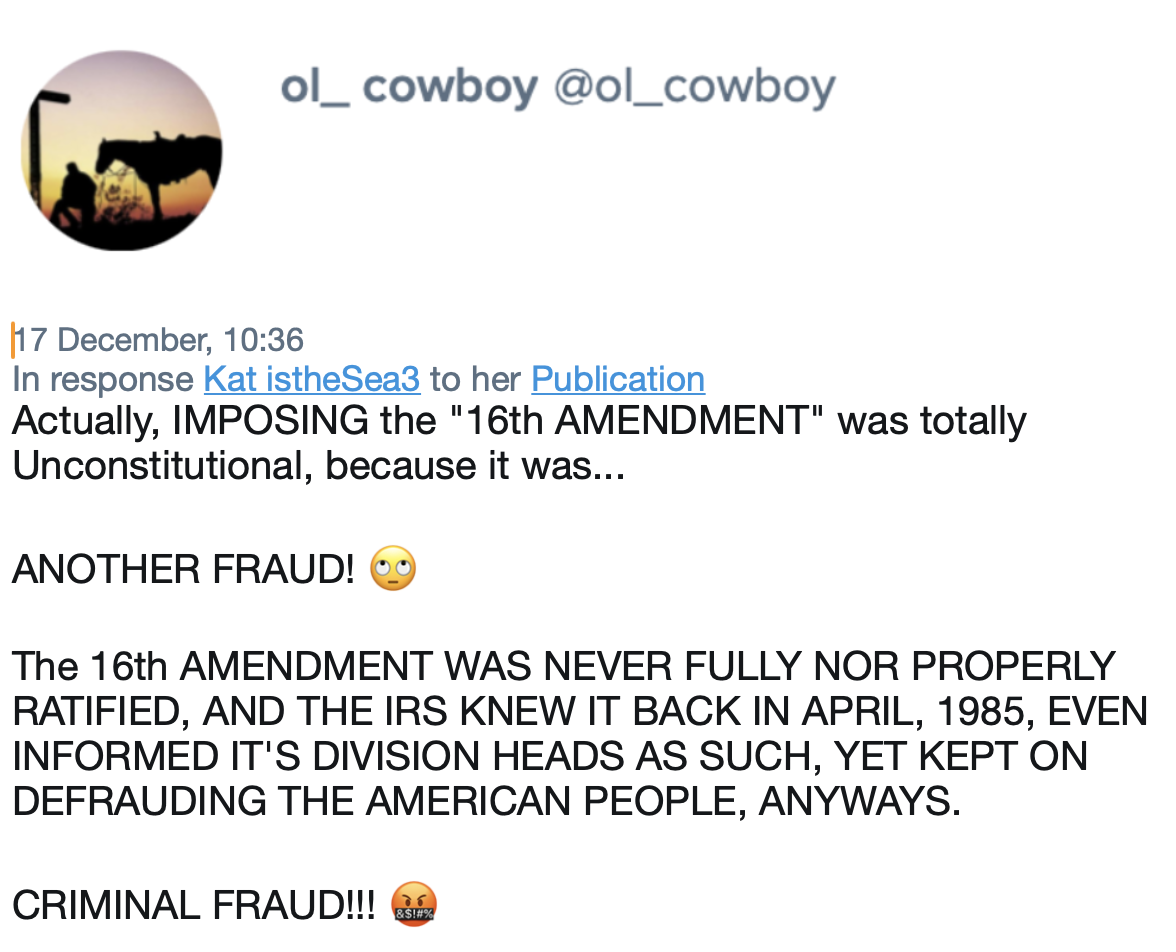
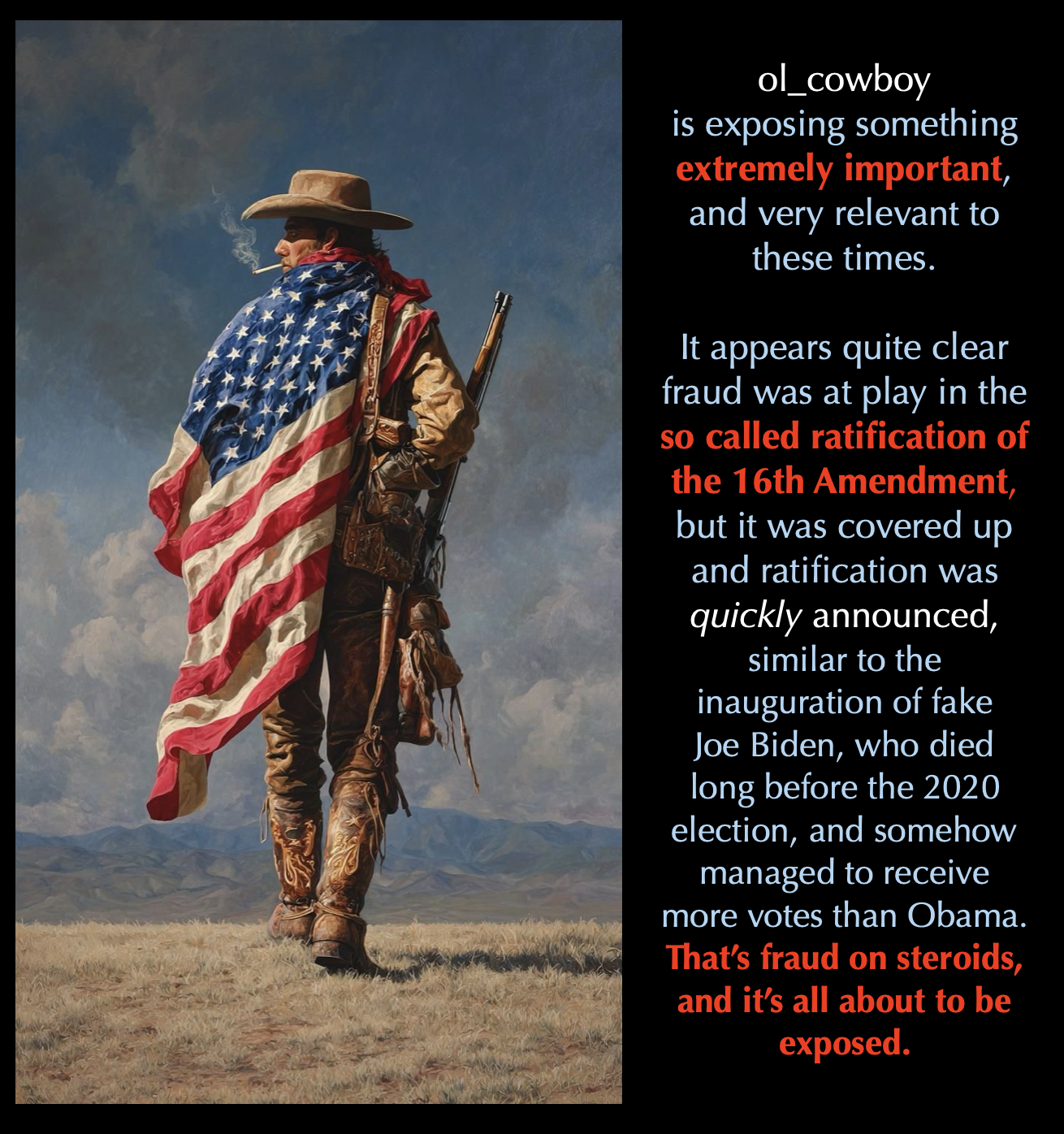
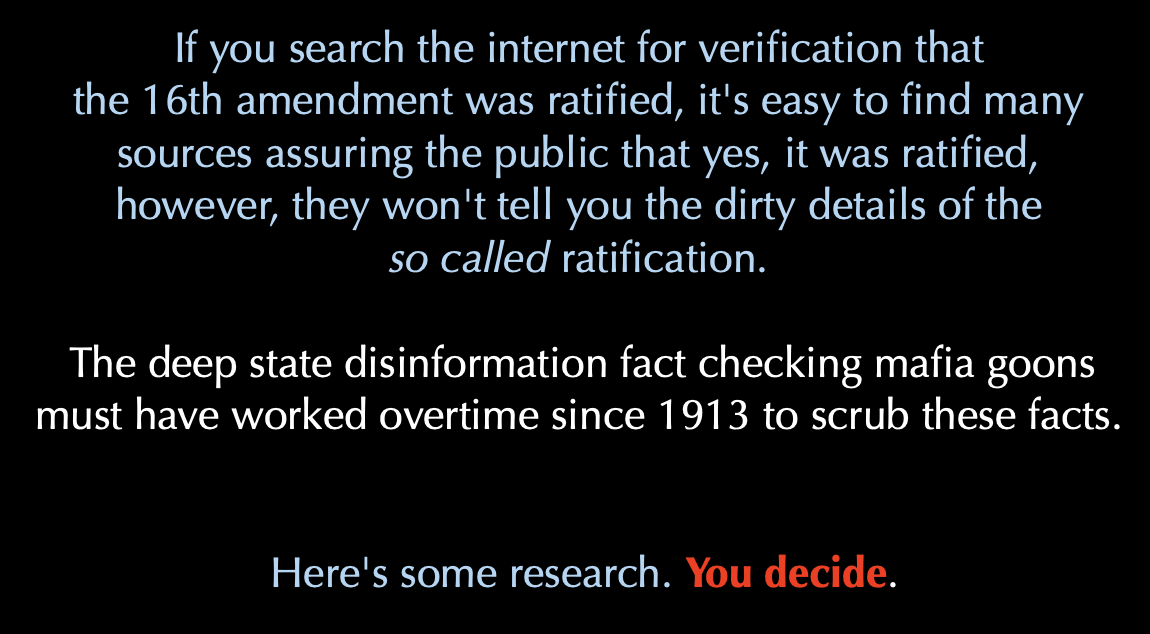
The Law That Never Was: The Fraud of the 16th Amendment and Personal Income Tax, is a 1985 book by William J. Benson and Martin J. “Red” Beckman, which claims that the Sixteenth Amendment to the United States constitution, commonly known as the income tax amendment, was never properly ratified.
Benson found variations in wording, punctuation, capitalization, and pluralization in the language of the Amendment as ratified by many states. He used the changes as part of the basis for his contention that those states had not properly ratified the Amendment. Benson further claimed to have found documents suggesting that some states that had been certified as having ratified the Amendment never voted to ratify it, or voted AGAINST ratification. Benson claimed that only up to four states had properly ratified the Amendment, when the Amendment required ratification by the legislatures of 36 states to become effective.
____________
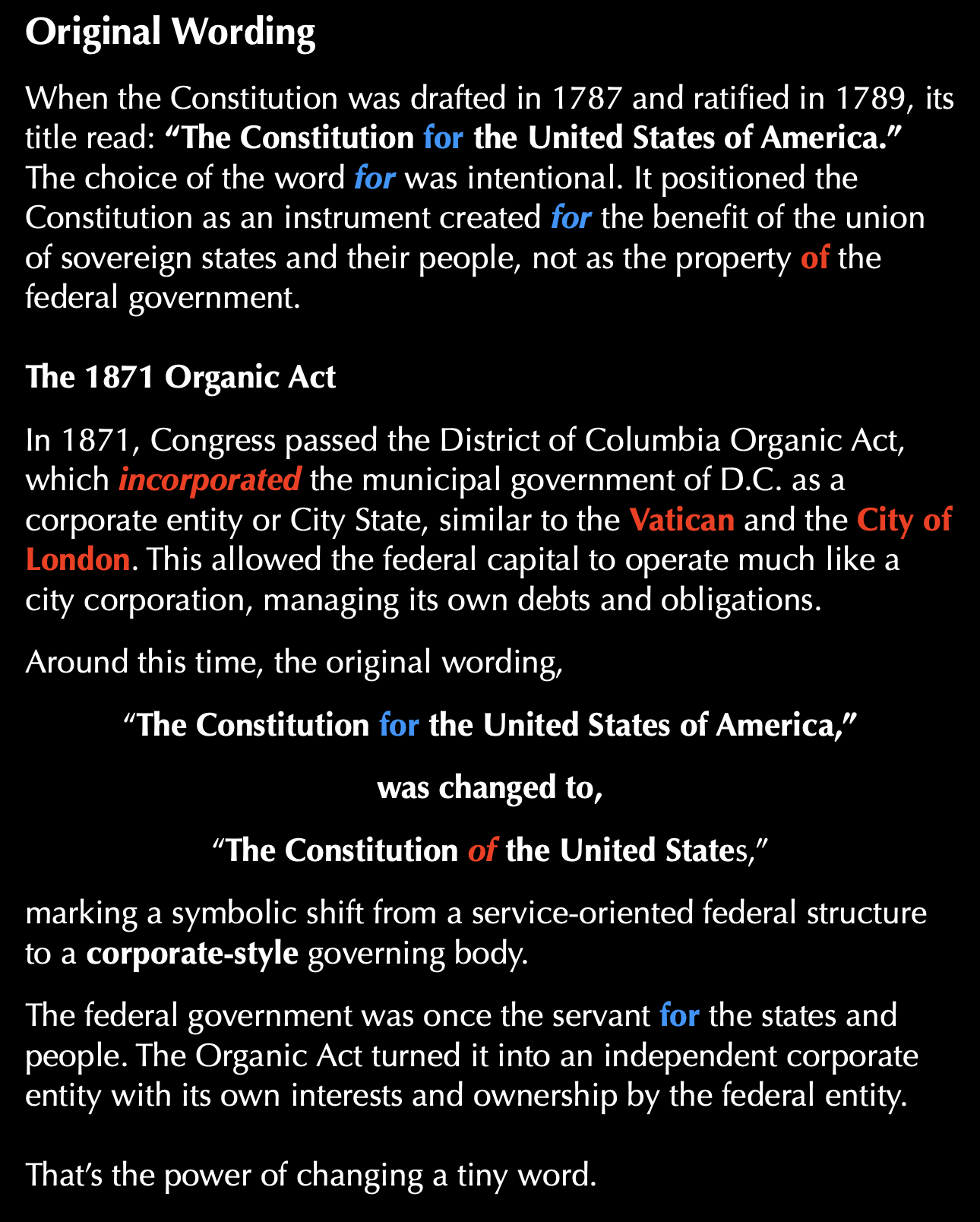
The aftermath of the Organic Act of 1871, illustrates how changing wording, punctuation, capitalization, and pluralization can alter the context and meaning of the document completely.
____________
____________
William J. Benson and Martin J. “Red” Beckman’s book, The Law That Never Was book, made the following claims:
- Seven states (Connecticut, Florida, Oregon, Pennsylvania, Rhode Island, Utah, Virginia) did not ratify the amendment, and it was reported as such.
- Two states (Kentucky and Tennessee) did not ratify the amendment, but Secretary Knox reported that they did.
- Eight states (Delaware, Michigan, Nevada, New Hampshire, South Dakota, Tennessee, Vermont and Wyoming) were reported by Secretary Knox as having ratified the amendment, but the States actually have missing or incomplete records of the ratification procedures or votes, and there is no conclusive record that they ratified the amendment or reported any ratification to the Secretary of State.
- Six states (Idaho, Iowa, Kentucky, Minnesota, Missouri, Washington) did approve the amendment, but the Governor or another official who was required by their respective state constitutions to sign the legislation into law did not sign the legislation.
- In twenty-five states (Arizona, Arkansas, California, Colorado, Georgia, Idaho, Illinois, Kansas, Kentucky, Louisiana, Maryland, Massachusetts, Michigan, Mississippi, Missouri, Montana, New Jersey, New Mexico, North Dakota, Tennessee, Texas, Vermont, Washington, West Virginia and Wyoming), the legislature violated a provision of its state constitution during the ratification process.
- Twenty-nine states (Arizona, Arkansas, California, Colorado, Georgia, Idaho, Indiana, Iowa, Kentucky, Louisiana, Maryland, Massachusetts, Minnesota, Mississippi, Missouri, Montana, Nebraska, New Jersey, New Mexico, New York, Ohio, Oklahoma, South Carolina, South Dakota, Tennessee, Texas, Vermont, West Virginia and Wyoming) violated “state law” or procedural rules during the ratification process.
Additionally, Benson asserted that:
- Twenty-two states approved the amendment, but with changes in wording, and the inexact version was accepted as a ratification of the original version.
- One state approved the amendment, but with variations in spelling, and the inexact version was accepted as a ratification of the original version.
- At least twenty-six states approved the amendment, but with changes in punctuation, and the inexact version was accepted as a ratification of the original version.
Benson asserted that the Oklahoma State Legislature changed the wording of the amendment they approved so that it meant the opposite of the original amendment as it was submitted to the States by Congress, but Secretary Knox counted Oklahoma as having approved the amendment anyway.
Benson also asserted, as an example of a state’s violation of its own Constitution, laws, or procedural rules, the claim that the Tennessee State Constitution prohibited the legislature from acting on any proposed amendment to the U.S. Constitution submitted by Congress until AFTER the next state legislative elections. According to Benson, the Tennessee legislature acted on the proposed 16th amendment the same month it was received, prior to any new state legislative elections. That’s not Lawful.
This information has been submitted in a court hearing, but the court simply sanctioned the litigants for advancing a “patently frivolous” position. Does all that fraud appear frivolous to you? Perhaps they meant that it was frivolous compared to their own fraud.
~ Some information above from Wiki with editing, additions and highlighting
____________
_____________
Elon’s post below from Kat’s link above
GREAT SHORT VIDEO
____________

____________
Brett Pike’s website below

____________
___________
_______
ForThePeople