


____________
____________
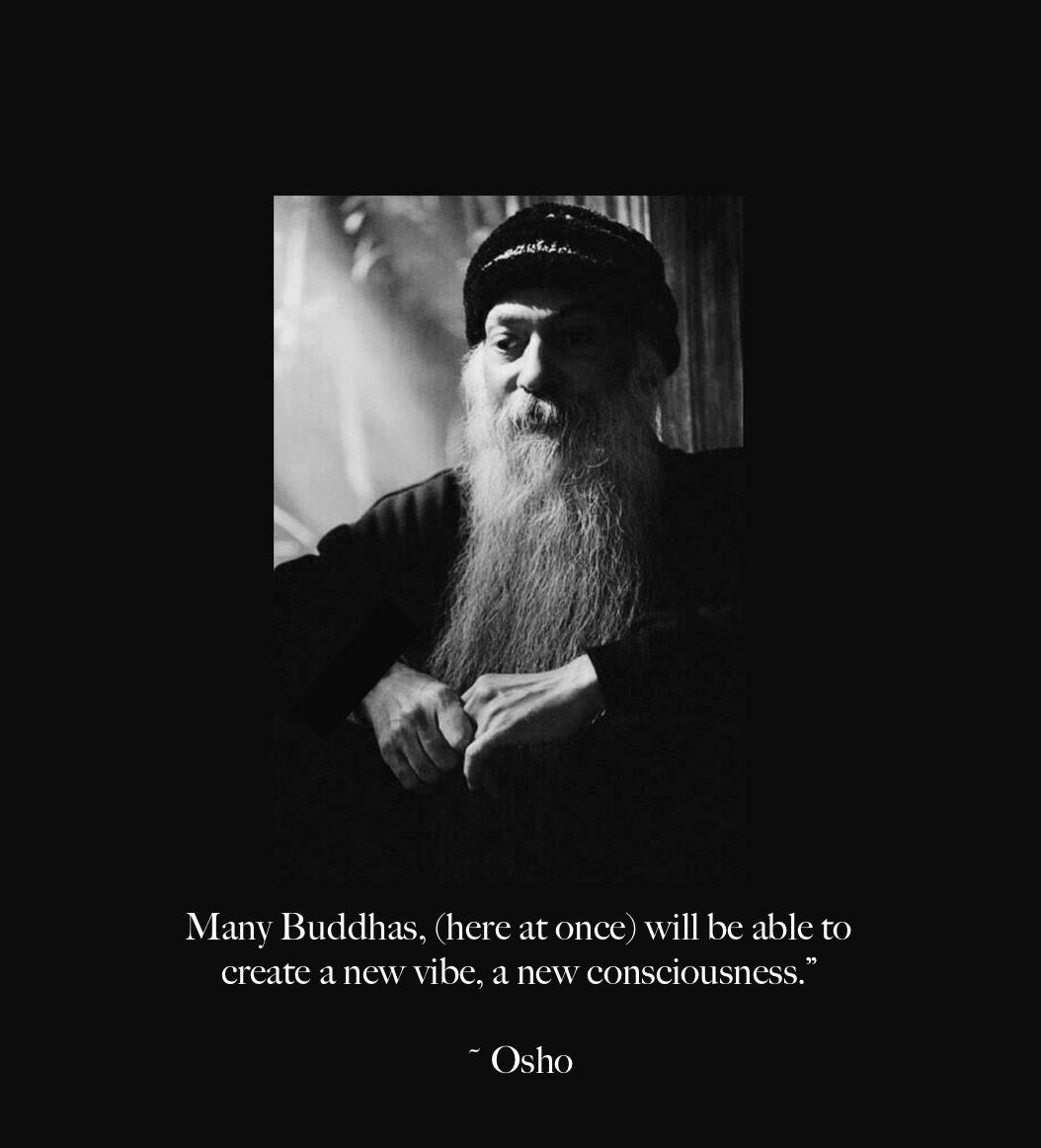
Partial Transcript from (कृष्ण : मेरी दृष्टि में) (Krishna: The Man and His Philosophy)
A discourse by Osho, July 20, 1970 in Mumbai, India.
____________
“It is so ironic that despite our opposition to war, we have been dragged into war over and over again. First we refused to fight, then some external power attacked and occupied our country and made us into slaves, and then we were made to join our masters’ armies and fight in our masters’ wars.
Wars were continuously waged, and we were continuously dragged into them. Sometimes we fought as soldiers of the Huns, then as soldiers of the Turks and the Moghuls and finally as soldiers of the British. Instead of fighting for our own life and liberty we fought for the sake of our alien rulers and oppressors. We really fought for the sake of our slavery; we fought to prolong our enslavement. We spilled our blood and gave our lives only to defend our bondage, to continue to live in servitude. This has been the painful consequence of all our opposition to violence and war.
It is also easy to understand warmongers like Genghis, Tamburlaine, Hitler and Mussolini, because they believe in war as the only way of life. Pacifists like Gandhi and Russell believe that peace alone is the right way. Both doves and hawks are simplistic in their approach to life and living.
Krishna stands for an integrated life, a total life; his vision is wholly whole. And if we rightly understand this vision, we need not give up either. Of course, the levels of war will change. They always change. Krishna is not a Genghis; he is not fond of destroying others, of hurting others. So the levels of war will certainly change. And we can see historically how the levels of war change from time to time.
Life is an adventure, an adventure of energy. And people who lag behind in this adventure, for lack of energy and courage, eventually have to die and disappear from the scene.
In this context also, Krishna’s message has assumed special significance. And it is significant not only for us, but for the whole world. In a way, the world is facing nearly the same situation India faced during the Mahabharat war.
There were two camps, or two classes, at the time of the Mahabharat. One of them was out-and-out materialist; they did not accept anything beyond the body or matter. They did not know anything except the indulgence of their senses; they did not have any idea of yoga or of spiritual discipline. For them the existence of the soul did not matter in the least; for them life was just a playground of stark indulgence, of exploitation and predatory wars. Life beyond the senses and their indulgence held no importance for them.
This was the class against which the war of Mahabharat was waged. And Krishna had to opt for this war and lead it, because it had become imperative. It had become imperative so that the forces of good and virtue could stand squarely against the forces of materialism and evil, so that they were not rendered weak and impotent.
Approximately the same situation has arisen on a worldwide scale, and in twenty years’ time a full replica, a scenario of the Mahabharat will be upon us. On one side will be all the forces of materialism and on the other will be the weaker forces of good and righteousness.
Goodness suffers from a basic weakness: it wants to keep away from conflicts and wars. Arjuna of the Mahabharat is a good man. The word “arjuna” in Sanskrit means the simple, the straightforward, clean. Arjuna means that which is not crooked. Arjuna is a simple and good man, a man with a clean mind and a kind heart. He does not want to get involved in any conflict and strife; he wants to withdraw.
Krishna is still more simple and good; his simplicity, his goodness knows no limits. But his simplicity, his goodness does not admit to any weakness and escape from reality. His feet are set firmly on the ground; he is a realist, and he is not going to allow Arjuna to run away from the battlefield.
Perhaps the world is once again being divided into two classes, into two camps. It happens often enough when a decisive moment comes and war becomes inevitable. Men like Gandhi and Russell will be of no use in this eventuality. In a sense they are all Arjunas. They will again say that war should be shunned at all costs, that it is better to be killed than to kill others. A Krishna will again be needed, one who can clearly say that the forces of good must fight, that they must have the courage to handle a gun and fight a war.
And when goodness fights only goodness flows from it. It is incapable of harming anyone. Even when it fights a war it becomes, in its hands, a holy war. Goodness does not fight for the sake of fighting, it fights simply to prevent evil from winning.
By and by the world will soon be divided into two camps. One camp will stand for materialism and all that it means, and the other camp will stand for freedom and democracy, for the sovereignty of the individual and other higher values of life. But is it possible that this camp representing good will find a Krishna to again lead it?
It is quite possible. When man’s state of affairs, when his destiny comes to a point where a decisive event becomes imminent, the same destiny summons and sends forth the intelligence, the genius that is supremely needed to lead the event. And a right person, a Krishna appears on the scene. The decisive event brings with it the decisive man too.”
“It is for this also that I say Krishna has great significance for the future.”
____________
____________
The best is yet to come!
____________
_______
ForThePeople